
News
News

A Second Life for the University of Bern's Furniture
A chair from 1967 that looks brand new: that is exactly what has become possible at the University of Bern, where a growing share of the furniture is no longer replaced but refurbished instead. It started with a project in the Gesellschaftsstrasse cafeteria. Ninety-two Eames Fiberglass Chairs were in use there, their seat shells worn and their bases covered in surface rust. Together with the Vitra dealer Büro Bischof Bern AG and long-standing service partner Oberli AG, the chairs were cleaned, polished and fitted with new glides in September 2023. The green models now stand in the (reopened) cafeteria at Gertrud-Wokerstrasse 3, the black ones in the university's study and dining spaces.
The difference between before and after is hard to miss, and that is exactly what makes visible how much potential sits in existing furniture once it is cared for instead of thrown away. Vitra itself recently dedicated a feature to the project in its own online magazine, confirming from the outside what had long been apparent on campus: the impact reaches beyond the university's own perception. The manufacturer now even uses the example as a showcase in its own presentations, a sign of how convincing the approach is beyond the university as well.
What started as a single project to restore existing furniture has, step by step, grown into more than that. At its core is the idea of preserving existing value instead of prematurely replacing furniture that still works, and establishing remanufacturing as a genuine alternative to buying new, one that keeps materials and resources in circulation for as long as possible. This links sustainability with design quality, and turns the circular economy into something visible in everyday university life rather than an abstract concept. Every restored chair is also a small but concrete contribution to the University of Bern's Roadmap Klima 2030, through which the university aims to gradually lower its operational CO2 emissions.
None of this has to start from scratch, the first examples are already in place and show that the approach works. A current example can also be found at the Bern Law Library. As part of a refurbishment project, the popular study desk chairs there were likewise refreshed and put back into use. At the ExWi Library too, well-liked armchairs are set to be reupholstered and refreshed. The first prototype has arrived, and the result is convincing.
Step by step, a new way of handling existing furniture is taking shape at the University of Bern, one that also demonstrates outwardly how circular economy, sustainability, cost-effectiveness and design fit together. Anyone with their own project idea for dealing with existing furniture, or who can imagine collaborating on one, is welcome to get in touch directly with the Sustainable Development team.
Talk Insights
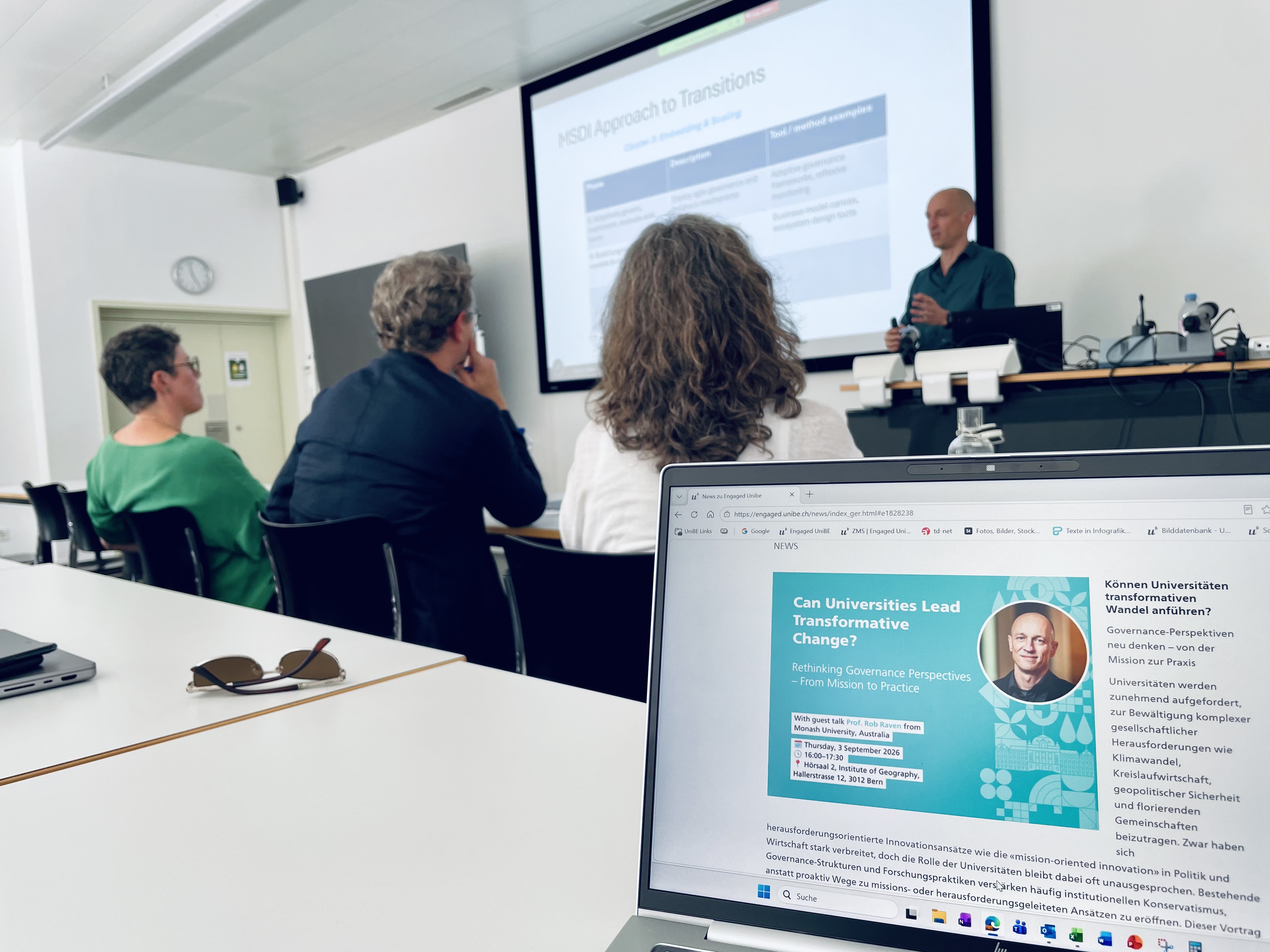
When Universities Promise Change: Three Levels Where It Gets Stuck
On 3 September, Rob Raven from Monash University visited the University of Bern as a guest of Engaged UniBE. His talk, "Can Universities Lead Transformative Change? Rethinking governance from mission to practice," covered far more ground than the time allowed. Here is a longer look at what he brought with him, including a detail that only really came through in the room rather than on the slides.
Raven has spent years studying how universities move from declaring transformation to actually delivering it. His starting point is familiar to anyone working in research communication: universities increasingly frame their work around ambitious missions on climate change, geopolitical security, or thriving communities, as Monash's own Impact 2030 Strategic Plan does. The literature behind this shift, from Mariana Mazzucato's "Mission Economy" to Schot and Steinmueller's work on three frames for innovation policy, is by now substantial. But between strategic ambition and lived practice there is usually a gap. Raven put it plainly: ambition frequently produces shallow change. The real challenge is institutionalisation, because transformative initiatives inside universities tend to stay fragile.
To understand that fragility, Raven and his team studied three levels at which universities try to put missions into practice: the organisational level, the infrastructural level, and the level of everyday practice. Each level is backed by its own substantial study.
The Organisational Level: What Almost a Billion Dollars Buys
At the organisational level, the team analysed twelve major research missions at Monash, ranging from eliminating dengue fever and inhaled oxytocin to the climate policy think tank Climateworks Centre. Together, these twelve initiatives represent close to a billion dollars in investment and over 1,200 researchers. What sets these missions apart from ordinary research projects, Raven argued, is not their size but their shape: they pursue a clear, long-term goal and explicitly combine scientific discovery with societal impact.
What is more telling is how these missions came about. Not through a university-wide framework or a strategic investment plan, but because individual entrepreneurial leaders assembled opportunities, partners and resources themselves. Institutional support was usually negotiated case by case, while the university's incentive and administrative systems stayed oriented toward conventional projects. Raven's conclusion doubled as a warning: the capacity to run missions cannot depend on exceptional individuals. It has to become systematic and repeatable.
The Infrastructural Level: The Gap Between Experiment and Ecosystem
The second study looked at university Living Labs, of which Monash runs several, from the Zero Emission Bus initiative to Fire to Flourish. Raven described Living Labs as a three-layered model: at the top, time-bound experiments; underneath, a relational infrastructure that connects those experiments; and at the base, the ecosystems of communities, policy and industry a university is embedded in.
The real insight sits in the middle layer. That relational infrastructure connects experiments that would otherwise stay isolated, retains relationships and learning across projects and time, integrates research, education, operations and engagement, and mediates between the university and its wider ecosystem. Without it, every experiment burns brightly and briefly.
This is exactly where an international study of 18 universities found a consistent pattern: Living Labs almost everywhere are constrained by what Raven called a "project logic." Short-term, uncertain funding. Dependence on committed individual champions. Relational work that is poorly recognised and under-resourced. A separation between research, education and operations. Limited continuity in institutional learning. Raven's summary was blunt: experiments proliferate, but institutional capacity does not necessarily accumulate alongside them.
The Practice Level: Where Change Actually Happens, and Where It Doesn't
The third study examined 21 initiatives from the Monash Sustainable Development Institute, MSDI, asking what transformative research actually looks like day to day. One striking finding concerns which systems these projects engaged with most: policies and institutional arrangements scored highest, well ahead of technologies and infrastructure, natural ecosystems, and systems of behaviour.
An even more striking finding is one Raven named openly as a tension. Measuring both the degree of change sought, system optimisation versus system transformation, and the approach taken, consensus-oriented versus reflexive and empowerment-oriented, the pattern was clear: practice consistently favoured optimisation and consensus over genuine transformation and empowerment. In other words, even projects that call themselves transformative tend, in practice, to lean toward gentle improvement rather than structural change. That is not a criticism of individual teams. It is a structural finding about how hard genuine transformation is to sustain in practice.
Raven also named what makes this work harder: institutional conflict between organisational cultures, tension between stakeholder groups, shifting resources, and external disruptions like Covid-19 or geopolitical shocks. And he named what makes it possible: personal capabilities such as comfort with uncertainty and clarity of purpose, professional capabilities such as deep sectoral knowledge and early, strategic engagement with partners, and organisational conditions such as strategic partnerships and an authorising environment, meaning genuine trust and backing from leadership.
A Reality Check, Delivered in Real Time
One moment in the talk landed harder than anything on the slides. MSDI, the very institute behind the 21 initiatives Raven had just walked through, has been disestablished as a standalone institute from the start of 2026. Its programmes have moved into the faculties, while some stayed in the portfolio of the Deputy Vice-Chancellor for Research. What came next was, in its own way, the most honest part of the evening. Rather than simply closing that chapter, Monash is now putting an additional million dollars over five years into a new, co-designed Climate Change and Sustainability Network, built on distributed governance rather than a central institute. Raven is one of the academics helping to design it. He was careful not to present this as a happy ending. As he put it, it is an attempt to keep the relational work alive in a different shape. That turned his own biography into the sharpest illustration of his own argument. The university's fourth mission, the one aimed at societal transformation, is the least institutionalised and therefore the most fragile, and that fragility does not spare the people studying it. Even an institution with close to a billion dollars invested in mission-driven research, and its own three-layer model for Living Labs, is not immune.
What This Means for Engaged UniBE
Listening from Bern, the parallels are hard to miss, and so are the differences worth naming honestly. In Raven's terms, Engaged UniBE currently sits mostly at the level of individual experiments: funded projects from Call 2025 and Call 2026, each pursuing genuine co-production with non-academic partners on its own timeline and its own budget. What connects them across calls and across years is still being built. The peer-learning event planned for this autumn, bringing together all nine funded projects from both cohorts, is a direct answer to the gap Raven describes at the infrastructural level: a portfolio approach that links individual experiments around a shared mission, rather than leaving each project to find its own way. The same is true of the ongoing effort to give Engaged UniBE a steady communication presence rather than a one-off launch. In Raven's language, both are investments in relational infrastructure rather than in any single project.
The more uncomfortable lesson concerns optimisation versus transformation. Raven's data showed that even avowedly transformative projects tend, in practice, to favour incremental improvement and consensus over genuine structural change. It is worth asking the same question of the projects Engaged UniBE funds each cycle: how many are testing whether a system can work differently, and how many are making an existing system somewhat better? Neither answer is wrong on its own, but only one of them matches the ambition in the programme's name.
And then there is the MSDI story itself, which is less a warning about Monash specifically than about what happens anywhere relational work is treated as overhead rather than infrastructure. The people who coordinate partnerships, document what is being learned, and hold a portfolio of projects together rarely show up in a budget line the way a research grant does. Raven's closing recommendation, that universities need to make missions explicit in strategy and invest deliberately in the connective tissue between projects, is not an abstract policy point. Put plainly, it is a case for treating the coordination work behind programmes like Engaged UniBE as something worth resourcing, not something to be absorbed quietly alongside everything else.
The full talk is available on YouTube: https://youtu.be/Xp8-FKnZ7js
News
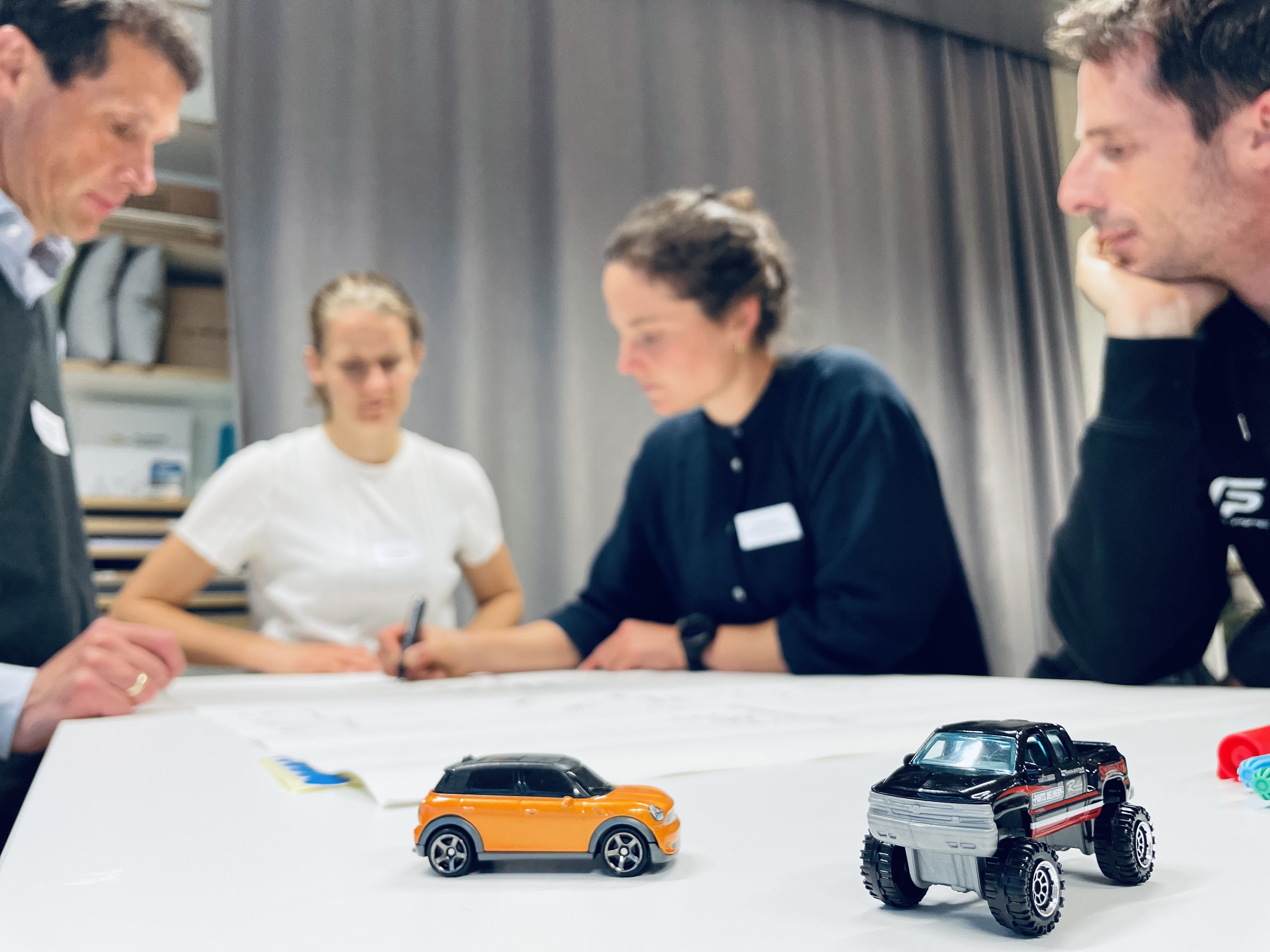
Climate-friendly mobility in sports clubs: first findings from the KliMoSpo project
844 kilograms of CO₂ equivalents per person and year are generated in Swiss grassroots sport through mobility to training and competition alone. Sport is thus not only contributing to climate change, it is also affected by it: heat and extreme weather are increasingly changing training and competition conditions. This double entanglement is particularly evident in winter sport, where skiers perceive climate change as a major threat to their sport, yet themselves contribute to it through long journeys and car dependency.
The project "For climate-friendly mobility in sports clubs" (KliMoSpo) at the Institute of Sport Science at the University of Bern addresses exactly this issue and has completed the groundwork in its first project year.
Why sports clubs are the right lever
Switzerland has around 18,000 sports clubs with roughly two million members. Clubs thus reach a large share of the population and shape their members' behaviour through shared structures and social norms, extending well beyond sport itself. Existing climate initiatives in Swiss sport have so far mostly focused on individual major events, largely leaving aside the everyday mobility behaviour of club members. KliMoSpo takes a different approach: instead of addressing individual athletes, the project takes the whole club as its starting point, since change is most likely to take hold there and carry over into everyday life beyond sport.
Three associations, one shared goal
Under the direction of Prof. Dr. Siegfried Nagel and Dr. Christian Moesch, KliMoSpo works closely with three societal partners: the Swiss Football Association (SFV), Swiss-Ski and the Swiss Alpine Club (SAC). The aim is the joint, evidence-based development, implementation and evaluation of pilot programmes for more climate-friendly mobility in grassroots sports clubs. The project runs from July 2025 to June 2028 and is structured in three phases: problem analysis and development, implementation, and evaluation and knowledge transfer.
The collaboration has been participatory from the outset. Three workshops with all partners, a dedicated sounding board of external experts from academia and practice, and six student groups from the master's module "Sport Marketing and Responsibility" laid the groundwork for the project.
What actually moves clubs
Findings from focus groups, questionnaires, interviews and document analyses paint a clear picture: climate-friendly mobility is broadly supported by club and section members. In everyday life, however, the car often remains the first choice, seen as more practical, flexible and better suited to everyday needs.
The car proves particularly persistent around matches and competitions. Equipment transport, time constraints and organisational demands, especially on coaches, make switching harder. The "last mile" to snow sport areas and early start times for tours or competitions also often make public transport an impractical option.
A look at the pilot project "Railway 50%" by the Central Switzerland Snow Sport Association (ZSSV) shows how difficult behavioural change is: the discount code for public transport tickets, offered to around 10,500 members, was redeemed only twelve times in the 2024/25 winter season. The initiative was generally well received but failed partly due to an overly complicated redemption process. Financial incentives alone evidently aren't enough to break established habits.
At the SAC, by contrast, low-threshold solutions tend to work better than existing complex digital systems: carpooling chat groups and fixed meeting points for shared rides take hold more easily in practice than new apps. And across all three associations, the same finding emerges: coaches, tour leaders and club leadership are key figures. Their example and active engagement help determine whether a carpool forms or the car is chosen over the train.
Visibility beyond the academic world
The interim findings have already attracted attention: a segment on SRF's Tagesschau covered the topic using an SFV club as an example, the project was published in the journal GAIA, and it was presented at the Sustainability Day of the four Bern universities as well as at the international conference "Sport and Sustainability" in April 2026 in Bern.
What's next
The problem analysis phase is complete, implementation follows next. From summer 2026, the team will work with practice partners and selected clubs to develop concrete pilot programmes. Ideas under discussion include "Bike to Training", training and awareness modules, and further club- and association-specific measures. Implementation is again closely linked to the master's module "Sport Marketing and Responsibility", which will co-develop and evaluate the programmes.
KliMoSpo is an example of how transdisciplinary research at the University of Bern becomes concrete: working with three sports associations, clubs and their members, with the ambition not just to understand, but to change something.
KliMoSpo is part of Engaged UniBE. Project leads: Prof. Dr. Siegfried Nagel and Dr. Christian Moesch, Institute of Sport Science. Partners: Swiss Football Association, Swiss-Ski, Swiss Alpine Club. A scholarly discussion of the project was published in August 2026 in the journal GAIA: Boemmel, A., Moesch, C., Moser, M., Piller, S. & Nagel, S. (2026). Sportvereine in der Verantwortung für nachhaltige Transformation. GAIA 35(3), 220–221.
For the GAIA article: 220_221_KliMoSpo-GAIA_ger.pdf
News
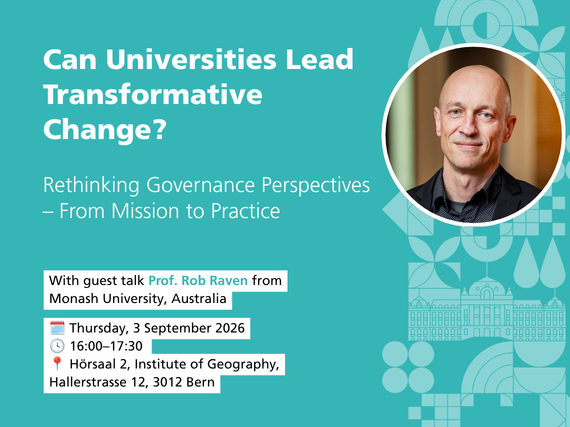
Can Universities Lead Transformative Change?
Rethinking Governance Perspectives from Mission to Practice
Universities are increasingly called upon to help address complex societal challenges such as climate change, circular economy, geopolitical security and thriving communities. Yet, while challenge-oriented innovation frameworks such as ‘missions-oriented innovation’ have proliferated in policy and industry, the role of universities often remains implicit. Incumbent governance arrangements and research practices often reinforce institutional conservatism rather than proactively provide pathways towards mission or challenge-led approaches. This presentation develops an integrated governance perspective that connects strategic missions, relational infrastructures, and everyday research and engagement practices to understand how universities are experimenting with driving transformative change.
Drawing on a program of conceptual and empirical work at Monash University, the presentation weaves together insights from mission-oriented research initiatives, the governance and development of university living lab infrastructures, and transitions-oriented projects. The analysis builds on a rich set of data sources, including over 50 expert and practitioner interviews, cross-case international comparison, documentary analyses, and internal reviews of major mission-oriented programs. It examines how universities can move from strategic mission-setting through governance and institutional embedding to practical enactment in research. By building on insights from mission-oriented innovation, living labs, and sustainability transitions, the presentation offers a multi-level view on transformative universities that moves beyond fragmented, isolated and short-term initiatives.
This integrated perspective fills a critical gap in understanding how universities experiment with institutional transformation to position themselves for challenge-led research and impact. It offers both conceptual insights and practical pathways for universities seeking to mobilise their research, education, partnerships, and governance capabilities toward societal missions.
Professor Rob Raven is Director of the Sustainability Transitions Lab at Monash Business School and a Fellow of the Academy of the Social Sciences in Australia. He is an internationally recognised scholar in sustainability transitions, innovation, and transformative change, with over 160 publications and significant research funding. His research examines how governments, businesses, universities and communities can accelerate responses to complex societal challenges, including climate change, circular economy transitions, and sustainable urban development. Rob is a co-founder of the global Sustainability Transitions Research Network, a Clarivate Highly Cited Researcher, and is listed among the world’s top 2% most influential researchers. He currently leads the Sustainability Transitions Lab and is convening the establishment of the Monash Climate Change and Sustainability Network, a university-wide initiative to strengthen collaboration and impact across climate and sustainability research at Monash University.
The talk takes place on Thursday, 3 September 2026 | 16:00–17:30
Hörsaal 2, Institute of Geography, Hallerstrasse 12, 3012 Bern
Announcement

Five projects for climate action and transdisciplinarity: Engaged UniBE enters the next round
14 project proposals, five selected projects and one shared goal: making knowledge effective where societal challenges arise. With the second Engaged UniBE call, the University of Bern is once again supporting transdisciplinary projects that bring research, practice and society together, making concrete contributions to a sustainable future.
Transdisciplinary research is becoming increasingly important at the University of Bern. The second Engaged UniBE call impressively shows how many innovative ideas emerge when researchers work on solutions together with partners outside the university.
A total of 14 applications were submitted from five faculties and institutions, with funding requests amounting to around CHF 2.5 million. The proposals focused on key questions for the future: How can we deal with the consequences of climate change? How do we protect biodiversity? How can we make cycles more sustainable? And how can infrastructures, healthcare systems and habitats become more resilient?
The submitted projects stood out for their high quality, strong partnerships and clear ideas of how research can create impact. They deliberately took science to new places: into the forest, into neighbourhoods and municipalities, into laboratories and onto the recycling yard.
Following a multi-stage evaluation process, five projects were selected for funding and support over three years. The decisive criteria were in particular their climate impact, the degree of collaboration with societal partners and their potential to make findings usable beyond the individual project.
The five funded projects
🌳 BallenbergWald: A laboratory for climate-adapted forests
At the Ballenberg Open-Air Museum, a transdisciplinary forest laboratory is being set up to study historical forms of land use, such as wood pasture and charcoal burning, under today’s climate conditions. The aim is to develop new foundations for climate-adapted forest management that are also relevant for other regions of Switzerland.
🌱 KliLaKö: Shaping climate adaptation together
Together with the municipality of Köniz, the project is testing climate-adapted land use and examining how scientific findings can feed directly into municipal strategies, spatial planning and climate protection measures. A concrete contribution on the path to net zero by 2045.
❄️ Keep it Cool: More sustainable laboratories through lower energy consumption
At the Institute for Infectious Diseases, researchers are investigating whether freezers can be switched from −80 °C to −70 °C without compromising the quality of valuable samples. Successful results could lay the foundation for more sustainable laboratory practice across the entire University of Bern.
♻️ PURE Bern: Enzymes for the circular economy
The project explores new ways of breaking down polyurethanes from real urban waste using enzymes and recovering valuable monomers. Together with recycling partners, it is developing new approaches to more sustainable plastics recycling.
🏗️ ReHoLab: The Re-Use Hof as a living lab
The Re-Use Hof Bannholz in Wohlen is becoming a transdisciplinary space for experimentation: building materials from demolition and overproduction are given a second life instead of being thrown away. The project examines how such circular models can be set up, embedded and scaled.
Creating impact together
The five projects will start in 2026. Over the next three years, they will receive not only financial support but also guidance through workshops, networking formats and communication activities. The aim is for findings to go beyond scientific publications and find their way into municipalities, laboratories, schools, companies and planning processes.
Warm congratulations to all funded projects, and a big thank you to everyone who submitted an application. Every proposal shows that the University of Bern has great potential for research that is shaped together with society and drives sustainable change.
📬 Questions or ideas for exchange: engaged@unibe.ch
Recap
A day with Prof. Manuel Franco: Rethinking cities, climate, and health together
On 4 December 2025, Prof. Manuel Franco, social and urban epidemiologist at the Basque Climate Change Research Centre (BC3 / Ikerbasque), visited the Institute of Social and Preventive Medicine (ISPM) at the University of Bern. Prof. Franco is well known as the Principal Investigator of the ERC Starting Grant “Heart Healthy Hoods”, which explored how urban environments shape cardiovascular health.
In a brainstorming workshop hosted by the research groups Climate Epidemiology and Public Health and Community Health and Health Care Systems, Prof. Ana Vicedo-Cabrera, Prof. Annika Frahsa, Dr. Apolline Saucy and Dr. Sophie Meyer discussed and reflected on preliminary project ideas related to the UrbanLab Viererfeld together with Prof. Franco.
Drawing on his extensive expertise in studying cities and neighbourhoods as complex public health environments, Prof. Franco critically examined assumptions, methods and impact pathways. Together, the group developed a project concept focusing on physical activity, climate change and urban space.
Physical activity, climate change and public health are closely intertwined. Weather and environmental conditions shape how safely and comfortably people can move through cities. Evidence suggests non-linear relationships between temperature and activity levels, alongside increasing heat-related mortality and mental health risks. At the same time, high-quality public spaces and supportive infrastructure are key enablers of safe physical activity.
The planned observational study will focus on a yet-to-be-built neighbourhood with mixed socio-economic characteristics, developing a monitoring framework to capture residents’ perceptions and use of public space over time. The aim is to support the co-creation of heatwave mitigation and adaptation strategies with residents. Methods will combine observational assessments with participatory approaches such as Photovoice or the Our Voice App, as well as in-depth interviews. The project will be implemented in modular components, including master’s theses in climate science and medicine. The project is planned to start in spring/summer 2026, documenting the “before” situation and following residents annually during heatwaves.
Following a relaxed lunch and wide-ranging conversations, Prof. Franco gave a lecture as part of the Bern Lectures in Health Sciences. He highlighted cities as constantly evolving environments and therefore crucial arenas for public health research and action. Improving urban health requires more than evidence alone: it depends on strong collaboration between researchers, citizens and policymakers. Citizen science methods like Photovoice make lived experiences visible over time, revealing missing green spaces, barriers to healthy food, or constraints on physical activity. While research generates knowledge, decisions about solutions ultimately remain political.
The key takeaway: Healthier cities emerge when we listen to communities, work across disciplines, and treat investments in health as investments in a shared future.
News
Promoting Sustainable Development through Education (FNE): Call with a new focus
The Promotion of Sustainable Development through Education (FNE) supports projects that strengthen sustainability-related competences and view learning as a shared, reflective process. FNE grants will now be more closely linked to Engaged UniBE by explicitly strengthening collaboration with non-university partners.
Through its Promoting Sustainable Development through Education (FNE) program, the University of Bern supports projects that strengthen sustainability-related competences and view learning as a collaborative, reflective process. A wide range of educational formats are eligible for funding, from courses and workshops to conferences, exhibitions, and podcasts.
FNE will now be more closely linked to Engaged UniBE: in addition to the current range of funding opportunities, cooperation with non-university partners is explicitly strengthened. This will open up further opportunities to design and implement educational projects together with actors from civil society, administration, culture, and practice—in a dialogical, transdisciplinary, and socially anchored manner.
FNE funding creates possibilities for the development, implementation, and evaluation of educational formats. The goal is education for sustainable development (ESD) that goes beyond the mere transfer of knowledge and opens up spaces for co-creation, reflection, and action.
Concrete examples from past FNE and Engaged projects show how diverse and effective sustainable development can be through education – from co-creative teaching formats to transdisciplinary real-world experiments with societal partners.
Submission deadline: 28 February, 2026
Contact: Centre for Development and Environment (CDE), ESD Team - sustainability.cde@unibe.ch
News
Universities as Engines of Sustainability Transformation
Why Willpower, Time, and Openness Are Needed How can universities effectively contribute to the sustainable transformation of societies? This question is addressed by Prof. Dr. Heike Mayer, Vice-Rector for Quality and Sustainable Development at the University of Bern, in her latest article in the journal GAIA.

Based on a response to the position paper by Nölting et al. (2025), Mayer emphasizes: universities are already important drivers of sustainable development today. However, the path toward becoming a consistently impactful, transdisciplinary, and transformative institution is long, demanding, and shaped by institutional diversity.
Using the University of Bern as an example, the article shows what progress is possible when sustainability is strategically embedded – through strong research traditions in climate and development, through Education for Sustainable Development (ESD), or through clear political and institutional mandates. At the same time, Mayer openly addresses the challenges that accompany this transformation.
A central element of this development is the initiative Engaged UniBE. It represents a conscious opening of the university toward society and new forms of collaboration between science and practice. Engaged UniBE supports transdisciplinary projects in which researchers work together with actors from civil society, politics, and business on concrete solutions for sustainable development. The article describes how this initiative emerged from a critical engagement with climate compensation and today deliberately invests resources in projects with societal impact.
In addition to opportunities, Mayer identifies three key hurdles on the path to sustainability transformation in universities: a lack of resources in times of tight budgets, a science culture still strongly shaped by quantitative metrics, and the perception of the university as an inaccessible “black box” for non-university actors. Transformation, the central message makes clear, cannot be achieved through individual flagship projects alone. It requires long-term political support, appropriate incentive structures, new forms of research evaluation, and above all the willingness of universities to actively engage in societal processes.
The article underscores: an engaged university does not emerge overnight. But with initiatives like Engaged UniBE, a changing scientific culture, and the courage to open up, it can become a driving force for a sustainable future.
👉 The full article is Open Access in GAIA 34/4 (2025).
👉 Artikel als PDF in German
News
Dies academicus 2025: How the University of Bern Creates Value – and Lives Engagement
On the occasion of the Dies academicus 2025, a video was released entitled “How the University of Bern Creates Economic Value.” It vividly illustrates how the University of Bern has an impact regionally, nationally, and internationally – and what contributions it makes to society, the economy, and politics.
In the second half of the video, Engaged UniBE takes center stage. It shows how transdisciplinary collaboration, regional anchoring, and dialogue with societal actors are actively practiced. In doing so, the video reflects key ideas from the speech of Rector Prof. Dr. Virginia Richter: international networking and societal engagement are not opposites, but two sides of the same responsibility.
Engaged UniBE exemplifies this understanding of a university that not only produces knowledge, but also shapes the future together with partners – dialogically, co-creatively, and sustainably.
👉 Watch the video „Wie die Uni Bern wirtschaftlichen Mehrwert schafft“
News

Your opinion matters!
Do you study or work at Mittelstrasse 43, or are you one of our neighbors in the Länggasse district? Then take part in this survey and share your opinion on the sustainable development of Mittelstrasse. The survey takes about 10 minutes, and by participating you have the chance to win one of 20 vouchers worth CHF 10 each for the “Bistro Mitti.” Join in by December 15, 2025.
Link to survey
The project Engaged Mittelstrasse explores the role of sustainability in everyday university life, using the site at Mittelstrasse 43 as an example. In this vibrant building with institutes, offices, a library, and a bistro, people from research, studies, teaching, operations, and the local community come together. Over the coming years, Engaged Mittelstrasse will address the topic of a sustainability culture from different perspectives. Through an open-ended process that brings together various actors, the aim is to create a transdisciplinary understanding of sustainability culture at the site and to foster appreciation of the diverse contributions.
The GreenCampus project is part of Engaged Mittelstrasse and focuses on greening the building’s courtyard to contribute to climate protection, promote biodiversity, and enable new integration into the neighborhood.
Engaged Mittelstrasse is carried out by the Centre for Development and Environment in cooperation with the Vice-Rectorate Quality and Sustainable Development within the framework of the Engaged UniBE initiative. The project is part of the national project RealTransform, funded by the swissuniversities program Strengthening a Culture of Sustainability at Swiss Higher Education Institutions (PgB 2025–2028), which investigates at several universities how so-called real-world experiments can contribute to sustainable transformation. The goal is to test new forms of collaboration, promote shared learning, and establish transdisciplinary spaces at universities.
Review

Sustainability Day of the Bernese Universities
How do we move from scientific knowledge to action for a sustainable future? What educational models are needed – and what forms of collaboration between universities, politics, society, and business? At the Sustainability Day of the Bernese Universities on October 31, 2025, around 250 participants engaged in intensive discussions on these questions. A review in 16 images.
Artikel just in German: Hier zum Artikel!
Call Engaged UniBE
Transdisciplinary Projects for Sustainable Development
The Vice-Rectorate Quality and Sustainable Development is calling for projects that are in line with the Climate Roadmap 2030. We are looking for innovative projects that use transdisciplinary methods to promote climate protection and involve social actors in the Bern region in new and effective ways.
Call Engaged UniBE

Transdisciplinary Projects for Sustainable Development
Die Wissenschaft trägt in verschiedenen Funktionen zur gesellschaftlichen Entwicklung bei. Das Webportal zeigt auf, welche Rollen Forschende dabei einnehmen können, und bietet Ansätze, diese zu reflektieren.
The Vice-Rectorate Quality and Sustainable Development is calling for projects that are in line with the Climate Roadmap 2030. We are looking for innovative projects that use transdisciplinary methods to promote climate protection and involve social actors in the Bern region in new and effective ways.
March 12, 2025
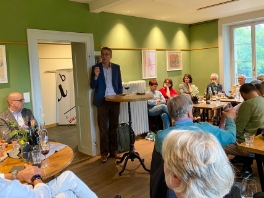
«Thinking AI. A future technology from a philosophical perspective» featuring Professor Dr. Dr. Claus Beisbart of the Institute of Philosophy
The first "Wissenschaftsapéro", a co-production of Engaged UniBE and the “Altes Pfarrhaus” meeting place in Muri, took place on March 12. Professor Dr. Dr. Claus Beisbart from the Institute of Philosophy spoke on the topic of “Thinking AI. A future technology from a philosophical perspective” and entered in a discussion with the audience. We would like to thank all participants for the interesting evening and look forward to the next Wissenschaftsapéro on May 21.
March 12, 2025
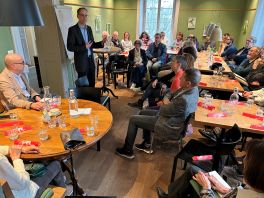
«Thinking AI. A future technology from a philosophical perspective» featuring Professor Dr. Dr. Claus Beisbart of the Institute of Philosophy
The first "Wissenschaftsapéro", a co-production of Engaged UniBE and the “Altes Pfarrhaus” meeting place in Muri, took place on March 12. Professor Dr. Dr. Claus Beisbart from the Institute of Philosophy spoke on the topic of “Thinking AI. A future technology from a philosophical perspective” and entered in a discussion with the audience. We would like to thank all participants for the interesting evening and look forward to the next Wissenschaftsapéro on May 21.
January 20, 2025
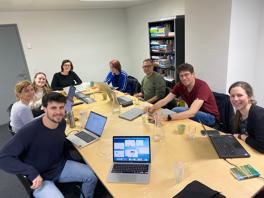
🌍 Strengthening a culture of sustainability at Swiss universities
On January 20, 2025, the exciting cross-university project “RealTransform: Real-world laboratories as transformation spaces for sustainable development in universities and society” was launched. In the coming months, we will set the course for real-world experiments that could mark the start of real-world laboratories.
Dr. Lilian Julia Trechsel, Jonas Niederberger and Dr. Claudia Saalfrank are looking forward to working with Dr. rer. pol. Jeannette Behringer, Linde Warland from the University of Zurich, Dr. Sarah-Jane Conrad, Dr. Moritz Gubler and Nina Simonett from the Bern University of Teacher Education, Dr. Clemens Mader, Prof. Dr. Mark Krieger and Dr. Christoph Küffer from the Ostschweizer Fachhochschule, Dr. Stefan Müller from the Network for Transdisciplinary Research and Leonie Barnsteiner from the University of Zurich Student Sustainability Commission and the resulting opportunities for sustainable development. 🚀
December 3, 2024

Synergies between society and university
At the beginning of December, representatives from the Länggasse, the municipality of Köniz, the Diemtigtal Nature Park and the University of Bern met to discuss projects and key points of transdisciplinary collaboration.
The workshop took place ‘at the gateway to the Diemtigtal’ on the premises of the Diemtigtal Nature Park in Oey.
October 24, 2024
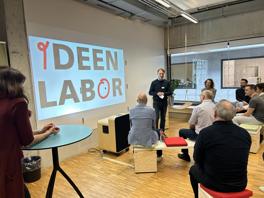
Opening of the Ideas Lab - A creative place for Engaged UniBE
On October 24, Hugues Abriel (Vice-Rector Research and Innovation), Elmar Anhalt (Dean of the Faculty of Humanities) and Sébastien Hug (Head of the Innovation Office) opened the University of Bern's Ideas Lab.
The Ideas Lab on Fabrikstrasse is an open project and creative space that is available free of charge to all students, researchers and employees of UniBE.
An inspiring place for #EngagedUniBE!
August 22, 2024
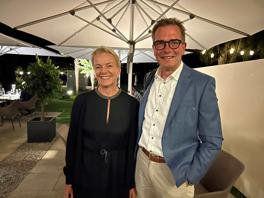
First Exchange with the City of Thun
Virginia Richter, Rector of the University of Bern, and Raphael Lanz, Mayor of the City of Thun, discussed the Engaged UniBE project at the University Executive Board retreat on the beautiful shores of Lake Thun.
May 21, 2024
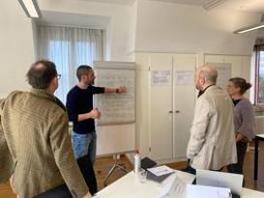
Engaged UniBE Concept
The Engaged UniBE concept : Promoting Sustainable Development at the University of Bern was approved by the Executive Board of the University on May 21. The concept focuses on the further development of sustainable development at the University of Bern (UniBE) and was developed in collaboration with representatives of the faculties, the centers, the departments and the central division as well as the Vice-Rectorate Quality and Sustainable Development (VRQ).
March 21, 2024
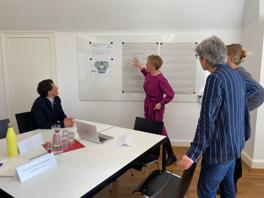
Engaged UniBE - for new interaction between the University and society
Engaged UniBE is helping promote sustainable development at the University to establish a new perspective on sustainability transformation with creative solutions